

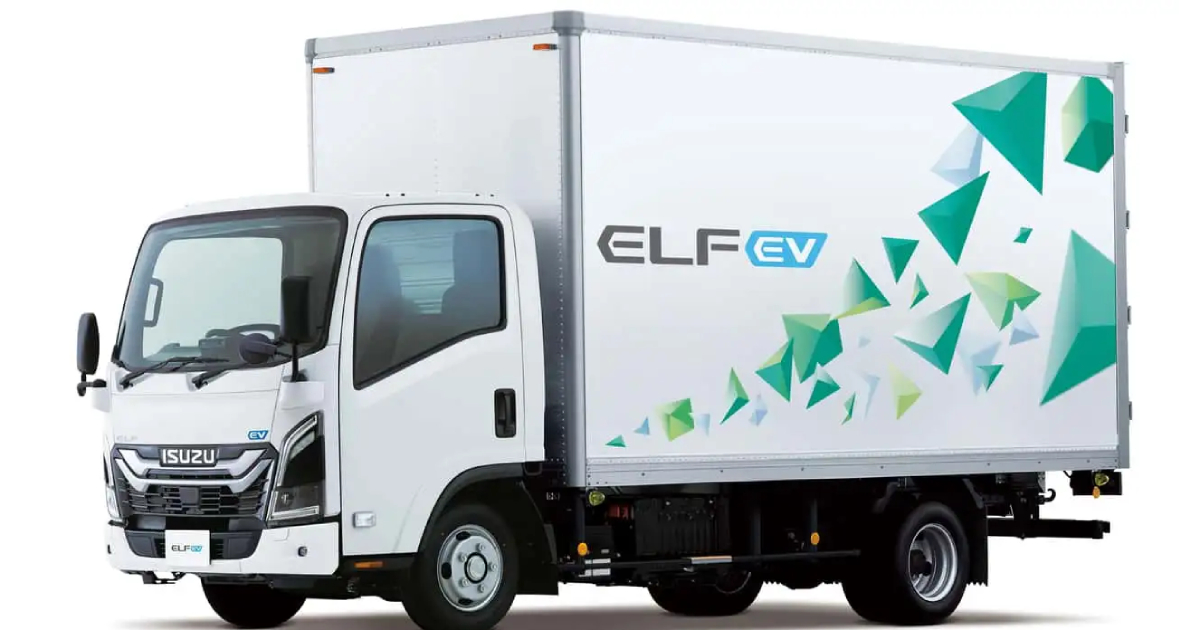
Isuzu and Toyota have officially announced the start of a joint project: the development of Japan’s first mass-produced light truck using hydrogen fuel cells (FCET). Production is scheduled to start in the 2027 fiscal year, with the novelty based on the Isuzu ELF EV electric model, which was presented last year.
Logistics without recharging breaks
The main problem of modern battery electric trucks (BEV) in urban transportation is time. When a truck needs to deliver goods to supermarkets or work with refrigeration units, every hour of downtime at the charger turns into a loss. Hydrogen technology offers a solution: refueling takes only a few minutes, comparable to diesel counterparts, while only pure water vapor comes out of the exhaust pipe.
The new vehicle is aimed at intensive logistics. These are daily routes with high mileage and frequent stops. Thanks to hydrogen’s high energy capacity, such a truck will be able to travel significantly longer distances on one "tank" than a purely battery version, without losing payload capacity due to heavy batteries.
Isuzu on the outside, Toyota on the inside
Structurally, the future truck is a symbiosis of developments by two giants. Isuzu provides its ELF EV platform with I-MACS architecture. This is a proven base that has already demonstrated its effectiveness in the light commercial vehicle segment. Toyota, in turn, will integrate a third-generation fuel cell system into this platform.
This power unit promises not only zero CO2 emissions, but also a significant reduction in noise and vibration levels, which is critical for nighttime operations in residential areas. Moreover, Toyota focuses on the durability of the fuel cell stack to ensure the truck’s resource meets the stringent requirements of commercial operation.
The battle for cost efficiency
Despite all the advantages, hydrogen remains an expensive pleasure. The cost of the vehicle itself and the fuel are the main barriers. Isuzu and Toyota plan to address this through process optimization and scaling. Isuzu will work on simplifying the chassis design, while Toyota will focus on reducing the cost of fuel cell production.
The project is being implemented within the framework of the Commercial Japan Partnership Technologies (CJPT) consortium. This association was created to accelerate the introduction of new technologies in commercial transport. Alongside the development of hardware, the companies collaborate with local authorities to develop a network of hydrogen refueling stations, without which even the most advanced truck will remain just an expensive exhibit.

