

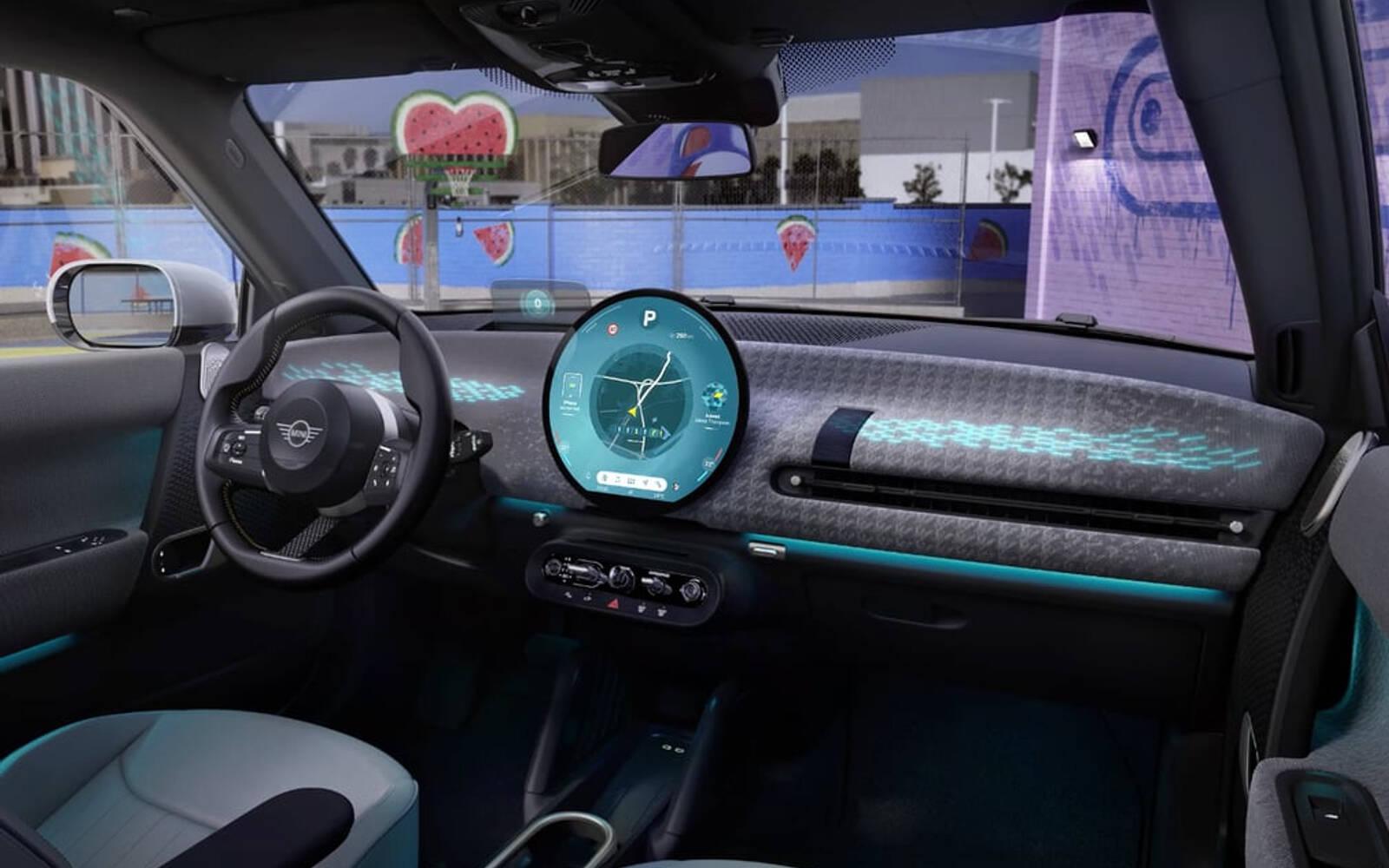
Mini's round 9.4-inch OLED centre display with native navigation. Photo: MINI
Mini will not drop its circular dashboard screen, even if smartphone mirroring systems such as Apple CarPlay and Android Auto struggle to fit inside it. The brand intends to keep the round format as a core design trait, though it remains open to refining the software over time.
Drivers using smartphone projection on the current 9.4-inch circular OLED display get a rectangular box in the middle of the panel. That layout leaves unused space around the edges, shrinking navigation displays in Apple Maps, Google Maps, and Waze. In contrast, Mini’s built-in navigation software fills the entire circular screen.
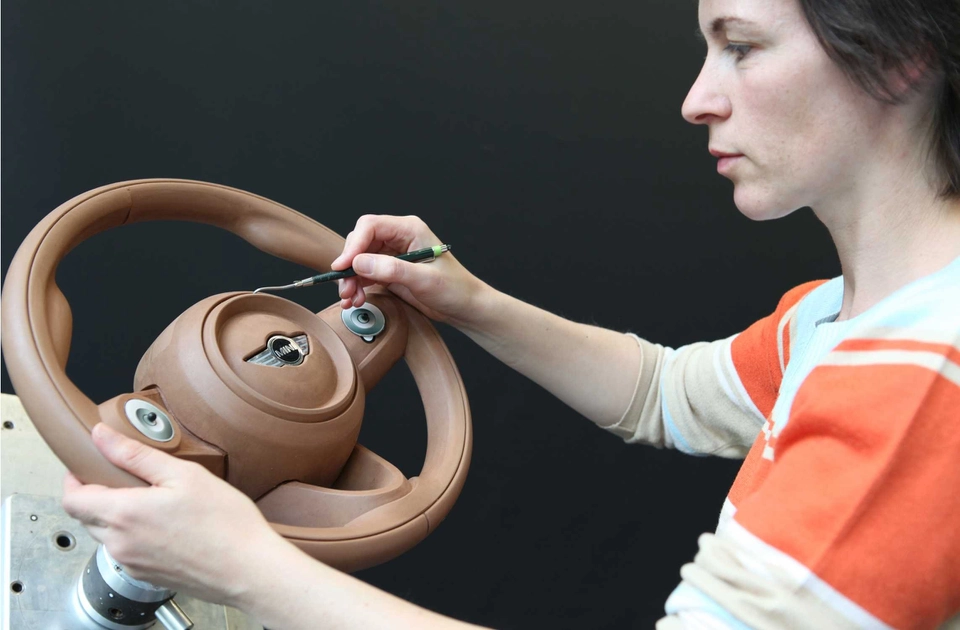
Clay model of Mini steering wheel during design development. Photo: press.bmwgroup.com
Heritage comes first
The company views the circular layout as an essential signature. “The round display is unique to Mini, and we want to keep that as part of the history,” Alexander Brockhoff, general manager of Mini Australia, told Drive.
That dashboard layout traces back to the original 1959 Mini, which had a round instrument cluster in the centre of the fascia with a toggle bar beneath it. While the 2014–2023 generation used a rectangular screen, the brand switched to a fully round OLED screen in mid-2023. The 9.4-inch unit debuted on the Cooper Electric before spreading across the wider range.
Controls shift to the screen
The circular screen runs on Operating System 9 and absorbs almost every vehicle control. Current models have no physical HVAC controls, though a physical volume knob and a head-up display for core driving information remain.
For drivers who prefer Apple or Google Maps over the car's native system, that leaves the smaller display window as an ongoing compromise.

