

The Hidden Cost of Modern Roads on Factory Paint
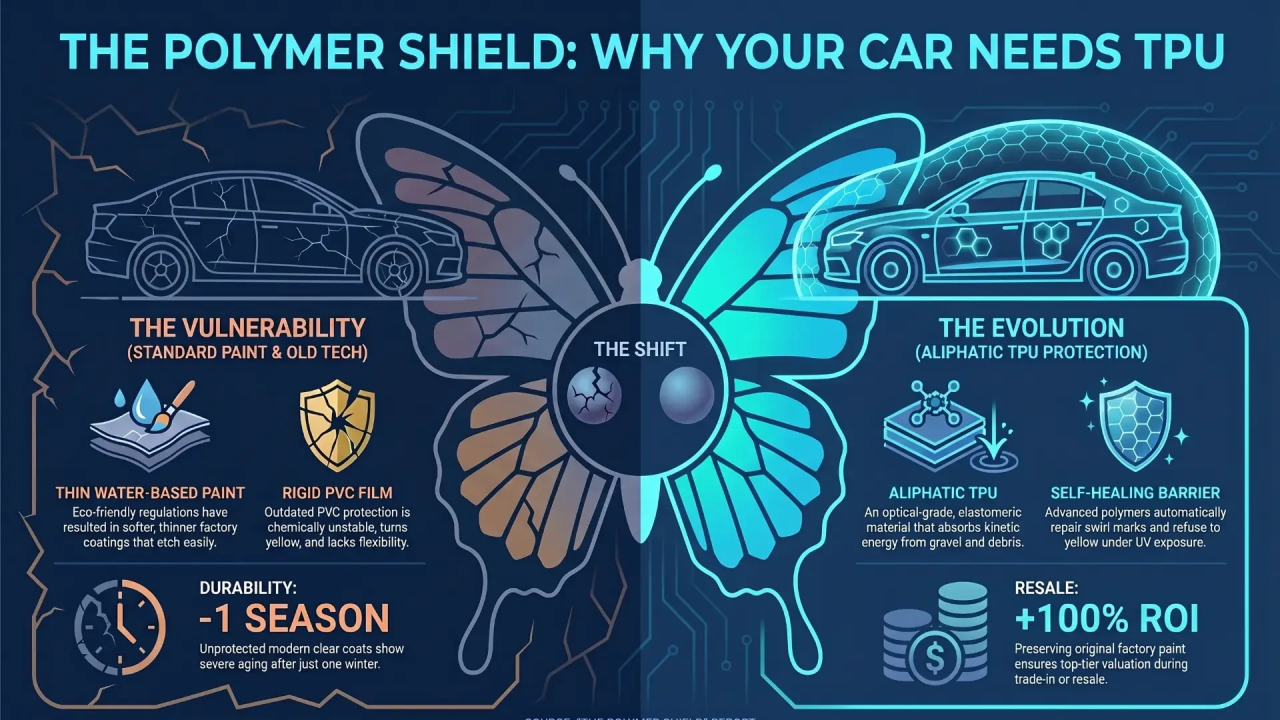
The vulnerability of modern vehicles is partially due to a shift in manufacturing. To comply with environmental regulations, manufacturers have transitioned to water-based paints. These eco-friendly coatings are significantly thinner and softer than the solvent-based paints used a decade ago.
As noted in recent guides on preparing your car for the winter season, the lack of chemical resilience in modern clear coats makes them highly susceptible to etching from road salts. Without physical intervention, a new vehicle can show signs of severe aging within just one season.
The Polymer Revolution in Auto Detailing
The detailing industry has evolved beyond traditional carnauba waxes and even liquid ceramic coatings. While these products offer high gloss and hydrophobic properties, they lack the structural density required to stop physical road debris.
Unlike temporary chemical sealants, the new standard in vehicle defense relies on physical, impact-resistant layers. To combat harsh environmental factors like road salt, freezing temperatures, and high-speed gravel impacts, premium detailing studios are abandoning cheap PVC plastics.
Instead, they source advanced elastomeric materials directly from a reliable paint protection film manufacturer ——FlexiPPF that specializes in optical-grade Aliphatic TPU. This ensures a self-healing barrier that absorbs kinetic energy and refuses to yellow under intense UV exposure, providing OEM-level durability.
Aliphatic TPU vs. Outdated PVC
To understand the shift in the market, one must look at the material science. For years, the market was flooded with PVC (Polyvinyl Chloride) films, which are rigid and chemically unstable.
In contrast, Aliphatic TPU (Thermoplastic Polyurethane) represents a significant leap in polymer engineering. The differences are not merely aesthetic; they are foundational to the film's performance in extreme climates.
- Flexibility: TPU remains pliable in sub-zero temperatures, whereas PVC becomes brittle and prone to cracking.
- UV Resistance: Aliphatic TPU is chemically stable against UV radiation, preventing the "yellowing" effect common in cheaper films.
- Elastomeric Memory: This allows the film to exhibit "self-healing" properties, where micro-scratches disappear when exposed to heat.
- Impact Absorption: TPU acts as a shock absorber, dissipating the energy of a rock strike across a wider surface area to protect the paint beneath.
The B2B Shift: Why Dealerships are Pre-Installing PPF
From a business perspective, the integration of Paint Protection Film (PPF) is no longer an "aftermarket-only" service. High-end dealerships and fleet managers are increasingly adopting pre-installation strategies.
By offering PPF as a standard protection package, dealerships can guarantee the long-term aesthetic integrity of their inventory. This is particularly relevant for high-performance car reviews where the visual condition of the vehicle directly impacts its brand perception and floor-room appeal.
For detailing studio operators, shifting to premium TPU reduces warranty claims and labor costs. High-quality films are easier to install around complex curves, ensuring a seamless finish that satisfies the most discerning luxury car owners.
Resale Value and the ROI of Paint Preservation
The condition of a vehicle's exterior is the single most critical factor in its depreciation curve, secondary only to catastrophic mechanical failure. The first thing an appraiser or private buyer sees is the quality of the paint.
According to industry valuation reports detailing how exterior wear affects vehicle depreciation, cars with significant clear coat damage, rock chips, or chemical etching face severe financial deductions at trade-in.
Preserving the original factory paint through physical barriers effectively guarantees top-tier valuation on the secondary market. In an era where "original paint" is a premium selling point, the initial investment in high-grade polymers becomes highly lucrative.
Key Takeaways
| Area | Key Takeaway | Impact/Data |
|---|---|---|
| Polymer Tech | Deploy Aliphatic TPU over PVC | Stops winter cracking & UV yellowing |
| Fleet Strategy | Pre-install PPF on all inventory | Lowers labor & warranty costs |
| Asset Valuation | Preserve original water-based paint | Prevents severe trade-in deductions |
Conclusion: Preventative Maintenance is the New Standard
The automotive industry has reached a point where protecting the exterior is just as critical as maintaining the engine. With paint quality becoming more fragile and road conditions more aggressive, "passive" protection is no longer enough.
By embracing the material science of Aliphatic TPU, owners and professionals can ensure that a vehicle remains in showroom condition despite the elements. In the modern market, the best way to maintain value is to ensure the damage never reaches the surface in the first place.

