

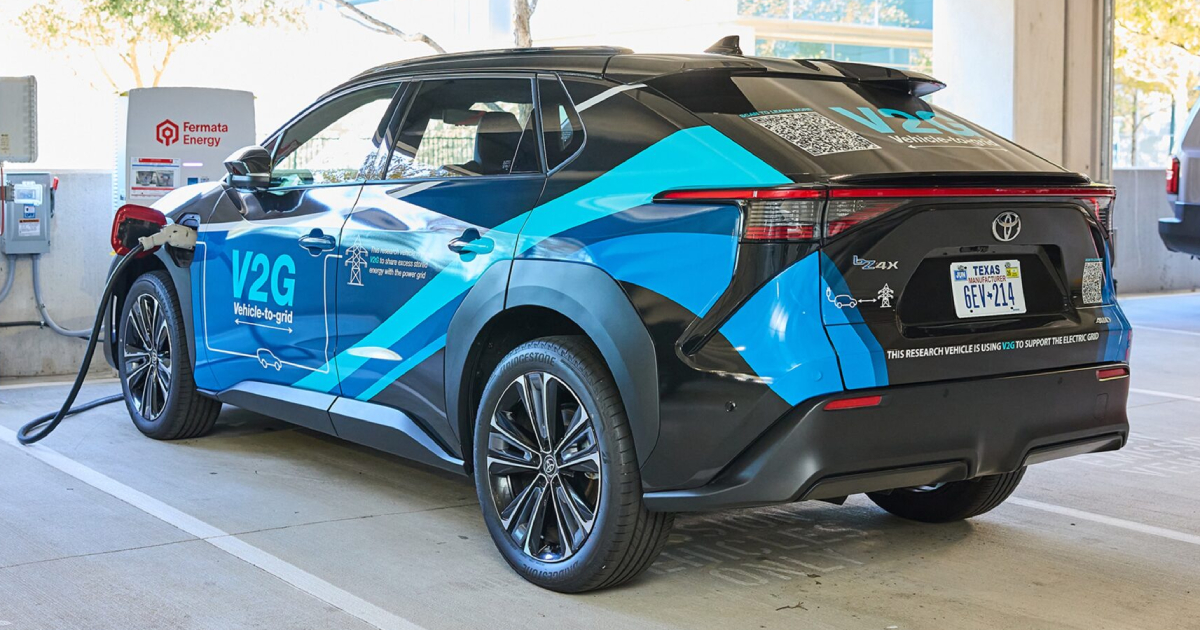
The automaker has launched a new phase of the V2G pilot project at its North American headquarters in Plano, Texas. The project is being implemented in partnership with the energy company Oncor. The tests use the Japanese-specification Toyota bZ4X electric vehicle and the Fermata Energy bidirectional charger. It not only charges the vehicle but also returns stored energy back to the power grid, analyzing the state of the grid and price signals to choose the optimal moment.
Simultaneously, Toyota is conducting similar pilot programs with other energy companies in the USA, including San Diego Gas & Electric in California and Pepco in Maryland. Within these projects, the company is studying the needs of local energy markets and the requirements that clients may have when using such technology.
The essence of V2G is that the electric vehicle connects to a special charger and, if necessary, transfers part of the energy from the battery back to the grid. For this, the energy company must be technically ready to accept such power. Drivers usually receive compensation or credit for participation and can opt out of energy transfer at any time. For this reason, such systems are also called "virtual power plants."
Toyota estimates that large-scale V2G implementation could have a significant impact on the US energy sector. The company noted that there are currently more than 4 million fully electric vehicles on the country’s roads. If all of them were equipped with bidirectional charging, collectively they could return about 40,000 megawatts of power back to the grid, which is comparable to the operation of approximately 40 nuclear reactors.
Source: Toyota

