

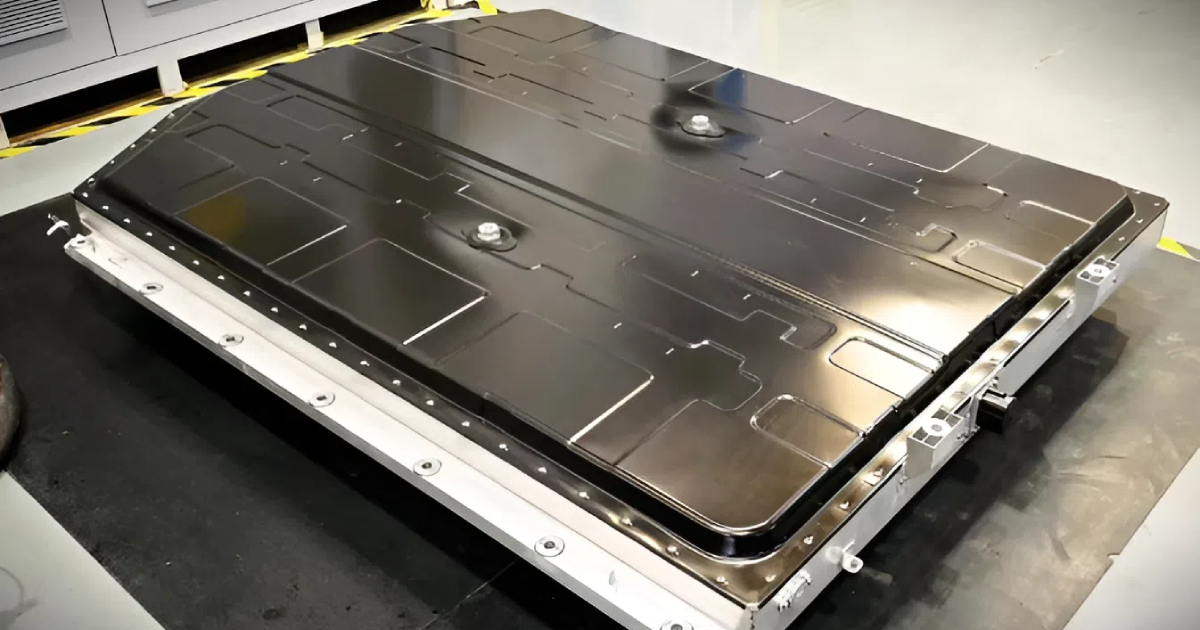
While the automotive world is trying to cope with lithium price fluctuations and raw material shortages, the Chinese conglomerate BAIC (Beijing Automotive Industry Holding Co.) has reminded the market of its presence. The company has unveiled the results of its development of its own sodium-ion batteries, which promise to be a serious competitor to lithium iron phosphate (LFP) batteries.
Charging speed and cold resistance
One of the challenges for modern electric cars is winter. However, BAIC's sodium-ion cells seem to be created specifically for harsh climates. According to the company's research division, the battery is capable of operating in a temperature range from -40°C to 60°C. Most interestingly, at -20°C, the battery retains over 92% of its energy. This effectively addresses the question of "where did the range go," which so worries electric vehicle owners in January.
Regarding energy efficiency, the energy density is 170 Wh/kg. This is a decent indicator for sodium, although it still lags behind top lithium counterparts. However, BAIC compensates for this with speed: the system supports 4C charging standard. In practice, this means the device can be charged in just 11 minutes. This pace makes operating an electric car as close as possible to refueling with gasoline.
Safety without compromises
Chinese engineers paid special attention to the durability of the system. Internal tests showed that the battery withstands overcharging to 200% of nominal capacity without catching fire or exploding. Moreover, during thermal tests, the elements remained stable when heated to 200°C. This is critically important for preventing thermal runaway, a major fear when operating lithium batteries.
The development is part of the "Aurora Battery" program, where BAIC is simultaneously working on lithium-ion, solid-state, and sodium technologies. Currently, the manufacturer has already prepared 20 patents covering everything from electrolyte composition to prismatic cell manufacturing methods.
Competition in the sodium market
BAIC is not the only player in this field. Sodium-ion technology is becoming a real trend in China due to the availability of raw materials. For example, in February 2026, Changan and CATL introduced the first production passenger electric vehicle with sodium batteries with a capacity of 45 kWh and a range of over 400 km. Its market debut is scheduled for mid-2026.
BYD also confirms its interest, working on the third generation of its platform, where the battery resource should reach 10,000 charge-discharge cycles. Although BAIC has not yet named a specific model that will receive the new battery, the readiness of the technological process for mass production hints that the announcement is imminent. This is an important step for the budget segment, where the cost of the battery makes up a large part of the total car price.
Source: CarNewsChina

