

Kia held its Investor Day 2026, where it presented its strategy until the end of the decade. The goal is ambitious - to sell 4.13 million vehicles annually by 2030. Interestingly, not only pure electric cars but also the tried-and-true hybrids are expected to make up a significant portion of this pie.
European Vector: Electricity and Compact Crossovers
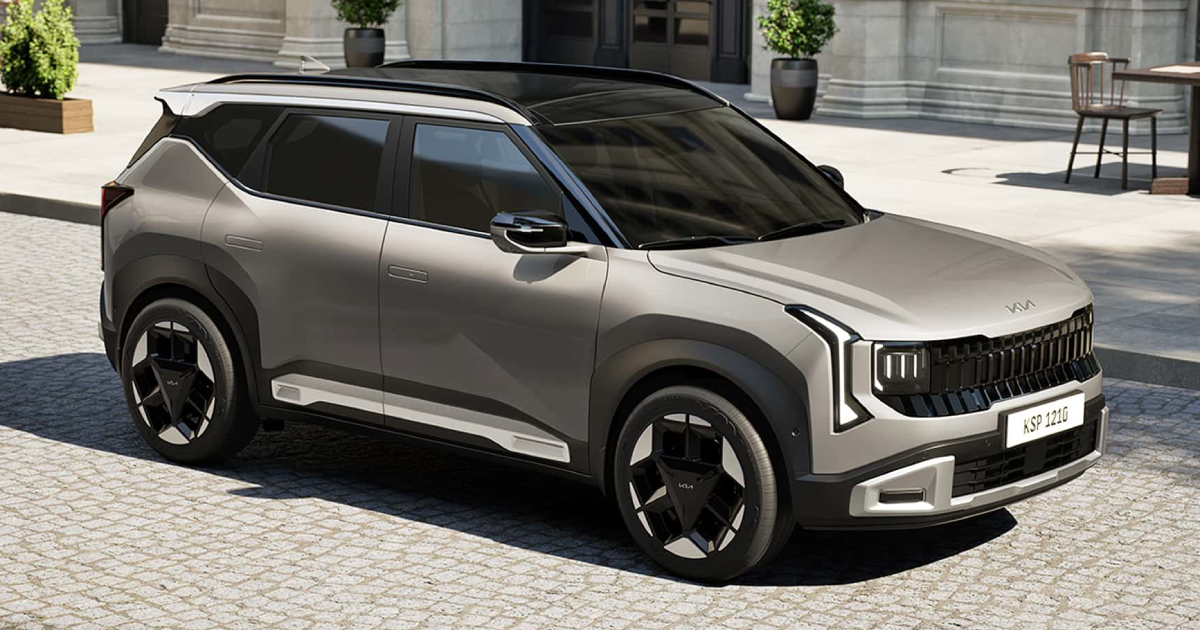
For Europe, Kia has a separate plan. The company aims to reach 746,000 cars sold annually, with about 66% expected to be electric vehicles. The main stars will be the EV4 sedan and a compact entry-level hatchback, likely to be named EV1. We are expecting the latter by 2027.
But don't rush to write off internal combustion engines. Even in 'green' Europe, the brand leaves room for maneuver. One of the key novelties will be the updated Seltos crossover. It will be available with the proven 1.6-liter turbo engine and in a full hybrid (HEV) format.
Global Expansion: Hybrids and Long-Distance Vehicles
Looking globally, Kia is preparing a real landing of novelties: 9 ICE models and as many as 13 hybrids. And it's not just about ordinary HEVs or plug-ins (PHEVs). The company is actively developing EREV (Electric Range Extended Vehicle) versions - these are electric vehicles where the internal combustion engine works solely as a generator to charge the battery.
Moreover, the Koreans are preparing a frame pickup. This is a serious bid for markets traditionally dominated by Americans and Japanese. For business, they will develop the PVB (Platform Beyond Vehicle) line. These are modular electric vans: the PV5 is already on the way, and in 2027 and 2029, larger PV7 and PV9 will join it, respectively.
Artificial Intelligence and Autonomy
The technological part of the strategy is based on close collaboration with NVIDIA. Kia plans to standardize sensors and software to make autonomous driving systems accessible and intelligent. An interesting point is the concept of the Data Flywheel. Cars will collect anonymous travel data to continuously learn from real road situations.

