

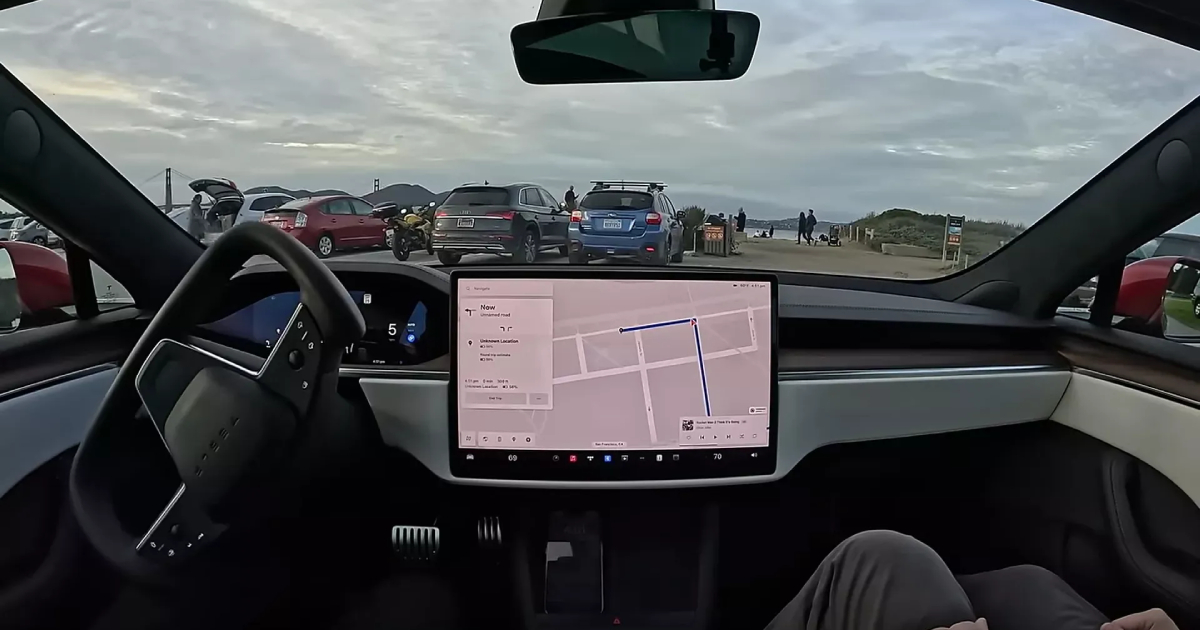
Tesla's Level 2 driver-assistance system is now live in China, but you won't find "FSD" anywhere on the local website. The company officially launched what it's calling "Tesla Assisted Driving" on May 21, 2026 — the first time Tesla has formally listed China as a market for the technology. The one-time fee sits at 64,000 yuan, roughly $9,420.
A name shaped by regulators
The branding isn't a marketing whim. China's Ministry of Industry and Information Technology (MIIT) banned terms like "full self-driving" and "autonomous driving" in April 2025, pushing automakers toward more cautious language. Tesla first swapped "FSD" for "Intelligent Assisted Driving" after that ruling, then landed on "Tesla Assisted Driving" this month for the formal rollout.
The system is classified as Level 2 driver assistance — the same SAE designation as Tesla FSD (Supervised) sold in the United States, meaning the driver must remain attentive with hands on the wheel at all times. Tesla's China listing notes that full functionality will be available "later," without a specific date.
What this means for the US product
For owners in the United States, the China launch changes nothing. Tesla FSD (Supervised) has been available here for years, now priced at $99/month via subscription after Tesla discontinued the one-time purchase option globally in February 2026. China is the notable exception: the one-time purchase model remains, apparently due to local regulatory constraints rather than any shift in global pricing strategy.
Tesla is targeting broader regulatory clearance in China — what the company calls full approval beyond the current supervised rollout — by Q3 2026, per comments made on its April 23 earnings call.
Still a work in progress
Tesla China posted several job listings this week tied to autonomous driving system testing, suggesting active development continues ahead of that Q3 target. The company acknowledged that the system will need further adaptation to China's road conditions and regulatory framework before wider deployment.
For now, the Chinese version of the feature carries a new name, a legacy pricing model, and a promise of more capability to come — a pattern that will look familiar to anyone who has followed Tesla's driver-assistance rollout in the US over the past several years.

