

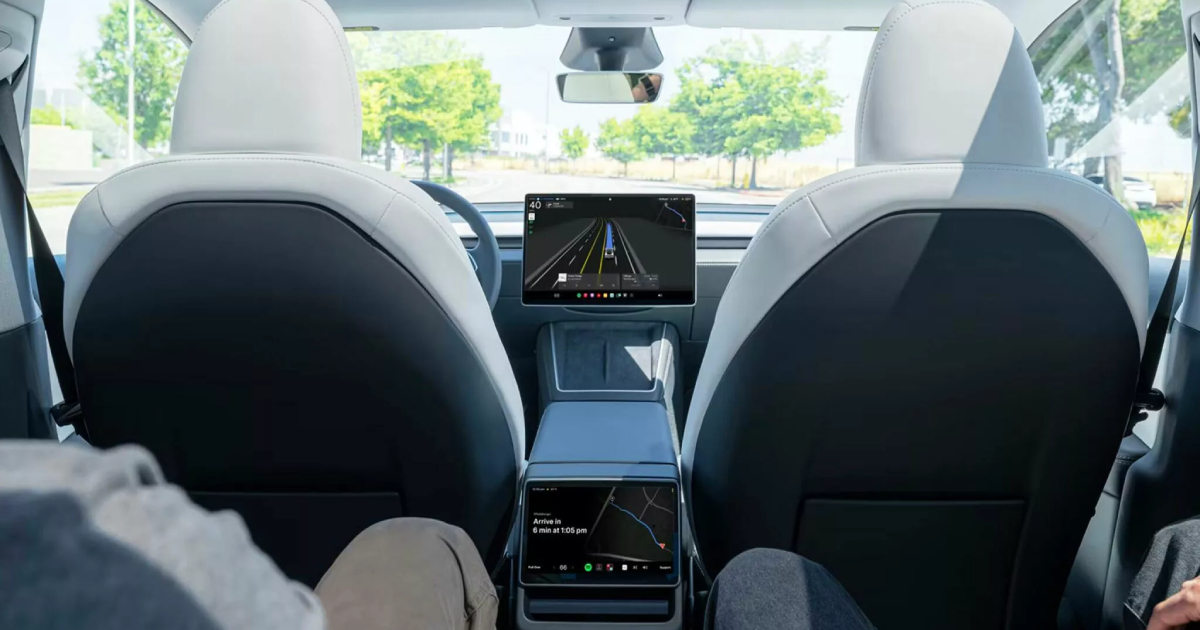
Tesla's robotaxi program is running in reverse. As of late May 2026, the company operates just 20 fully unsupervised vehicles across Austin (14), Dallas (3), and Houston (3) — a fleet that peaked in December 2025 and January 2026, then contracted. Six years after Elon Musk promised one million robotaxis on the road by 2020, the gap between promise and reality is hard to ignore.
A shrinking fleet, not a growing one
Tesla officially launched its unsupervised robotaxi service in Texas last year, initially with a safety monitor in the passenger seat. That requirement has since been lifted for a portion of the fleet — but the headcount keeps falling, not rising. Over the past 30 days, Tesla used 92 vehicles total across its ride-hail network nationwide; only 33 operated without a human backup driver. In California, regulators have not cleared Tesla for unsupervised operation at all. Its Bay Area service runs as a standard ride-hail aggregator with human drivers behind the wheel.
The safety picture helps explain the caution. Tesla's robotaxi vehicles recorded 14 crashes in roughly 800,000 miles of operation — about 1 incident per 57,000 miles. Human drivers average closer to 1 incident per 500,000 miles. That's a rate 4 to 9 times higher than the human baseline, depending on the benchmark used. NHTSA has active investigations covering red-light running, lane-crossing errors, and object-detection failures — per Electrek. Tesla has not publicly explained the fleet reduction.
Waymo's scale makes the contrast stark
While Tesla counts vehicles in the dozens, Waymo operates roughly 3,000 robotaxis across more than 10 US cities — San Francisco Bay Area, Los Angeles, Phoenix, Austin, Atlanta, Miami, Dallas, Houston, San Antonio, and Orlando among them. The company logged 400,000 to 500,000 paid rides per week as of February 2026 and is targeting 1 million rides per week by year-end, according to Electrek's May 13 coverage. In February, Waymo closed a $16 billion funding round to accelerate that growth.
The two companies have taken fundamentally different technical paths. Tesla relies on cameras alone — no lidar (laser-based ranging sensors), no radar. Waymo pairs cameras with lidar and radar. That sensor stack costs significantly more per vehicle, but the operational results so far favor the hardware-heavy approach.
What's ahead for Tesla
Tesla has announced plans to expand the robotaxi service to Phoenix, Miami, Orlando, Tampa, and Las Vegas — but none of those markets are live yet. The next major software overhaul, FSD (Full Self-Driving) v15, which uses Level 2 driver-assistance technology requiring human supervision, has reportedly been deferred to late 2026 or early 2027. Musk reiterated in May 2026 that "widespread" robotaxi service would arrive by year-end. The current trajectory makes that timeline a stretch.

