

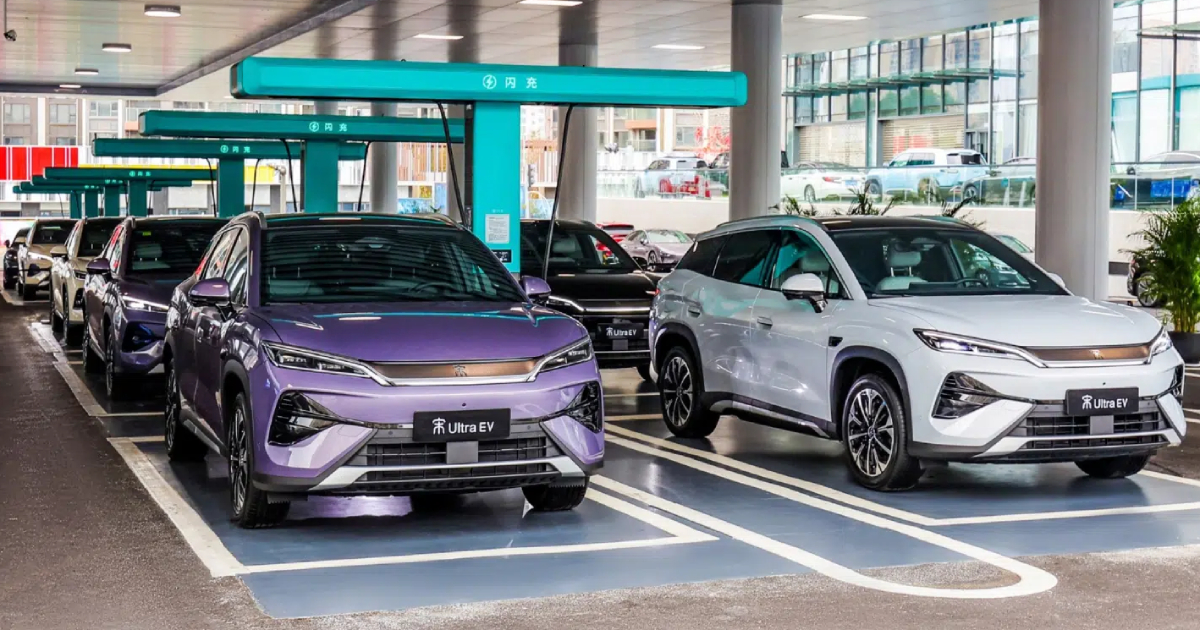
Chinese giant BYD officially launched the Song Ultra EV model on the market. Prices start at $21,000 and reach $24,800 for the top version. Considering the specifications, competitors will have a tough time once again.
New Short Blade 2.0 Batteries
The main feature of the novelty is the use of Short Blade Battery 2.0 storage units. They are available in two capacity options: 68.4 kWh and 82.7 kWh. This provides a range of 620 km and 710 km according to the CLTC cycle, respectively.
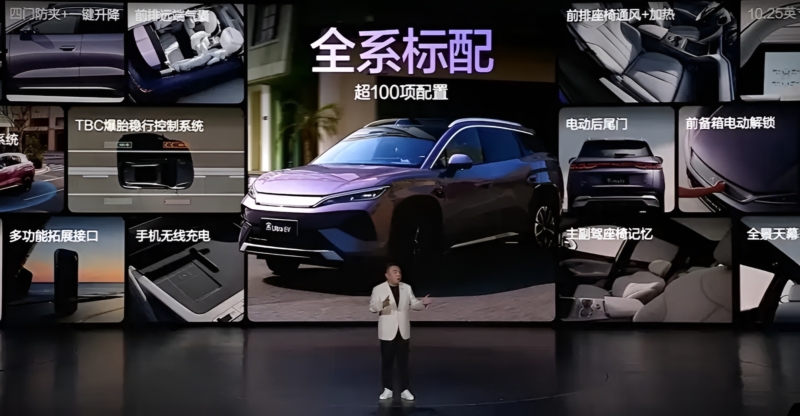 Photo: Autohome
But the range figures are only part of the story. The charging speed is impressive: energy from 10% to 70% can be replenished in just 5 minutes. Even a full cycle to 97% takes only 9 minutes. Remarkably, even in severe cold (-30°C), the charging time increases by only 3 minutes.
Design and Aerodynamics
Externally, the Song Ultra EV adheres to minimalism. The front part features a flat panel instead of a grille and a narrow LED strip connecting the headlights. Thanks to 19-inch wheels with low aerodynamic drag and well-thought-out body lines, the crossover looks swift. At the rear, there are signature lights and an integrated roof spoiler.
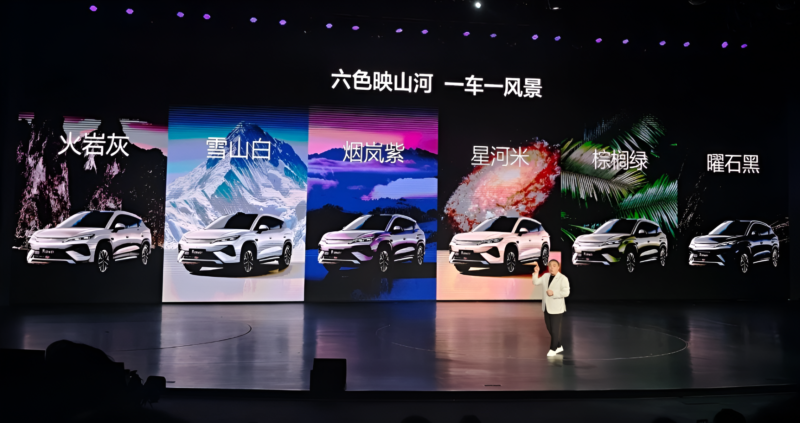 Photo: BYD
A Cabin that Turns into a Sleeping Space
Inside, BYD spared no expense on technology. The focal point is a 15.6-inch rotating multimedia screen, complemented by a 10.25-inch instrument panel and a 26-inch head-up display (HUD). The system uses the new UI 7.0 interface.
An interesting feature is the bed mode. The front and rear seats can be folded to form a flat surface approximately 1.8 meters long - perfect for rest during long journeys. Additionally, the front seats feature ventilation, heating, and a 10-point massage, with 8-way electric adjustment for the driver.
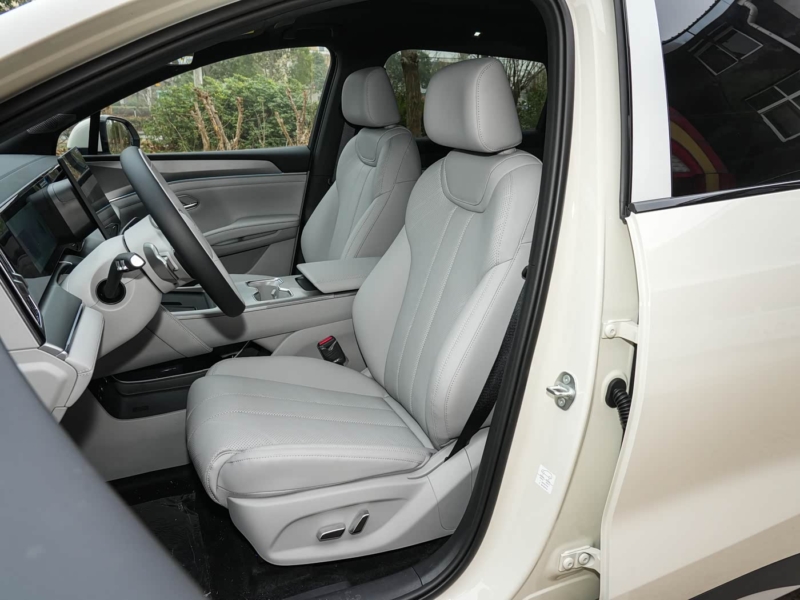 Photo: Autohome
Power and Intelligence
The crossover is offered exclusively with rear-wheel drive. The lower versions have a motor with 240 kW (326 hp), while the higher ones feature a 270 kW (367 hp) motor with a torque of 305 Nm. The maximum speed is limited to 210 km/h.
Comfort is ensured by the intelligent damping system DiSus-C, which is part of the standard equipment along with the rear multi-link suspension. And for those who value autonomy, the optional DiPilot 300 system with lidar and 27 sensors is available, supporting navigation autopilot in the city and on the highway, as well as automatic parking.
Practicality is also at a high level: in addition to the main luggage compartment with a volume of 730 liters (expandable to 1659 liters), there is a front compartment with a capacity of 150 liters. A built-in refrigerator is also provided, operating in a range from -6°C to 50°C.
The demand for the model is already feverish - the number of pre-orders exceeded 21,000 units even before the official start of sales.

