

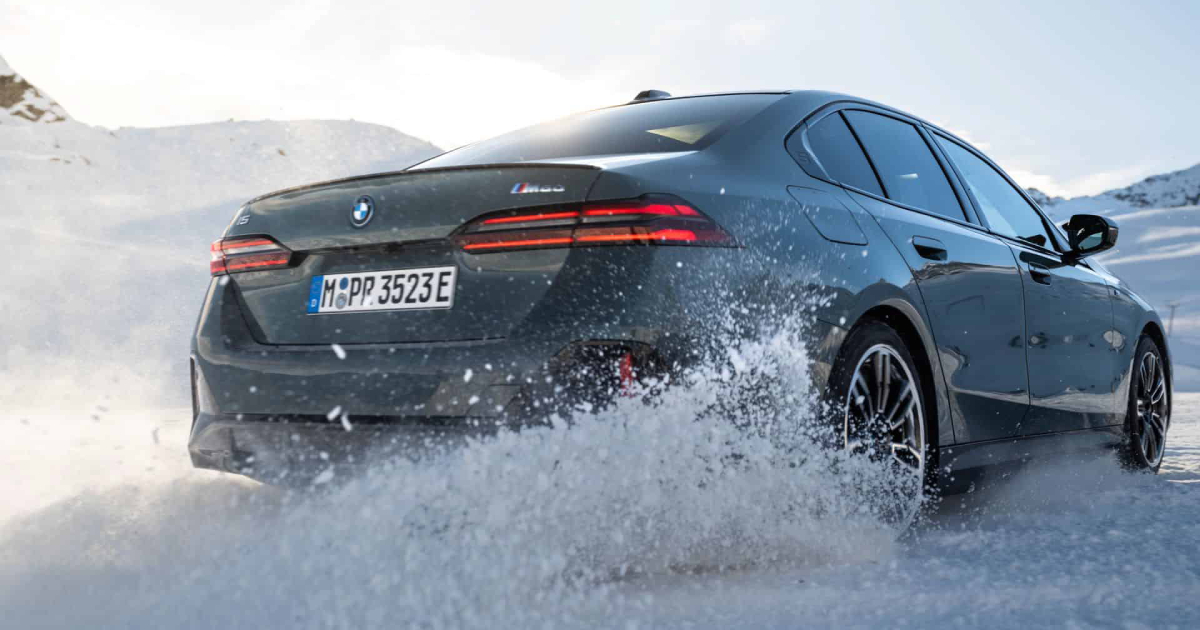
BMW built its brand on the promise of the "Ultimate Driving Machine" — and for decades, that meant rear-wheel drive. But the brand's home market is telling a different story. In the first quarter of 2026, 60.2% of new BMWs registered in Germany came equipped with xDrive all-wheel drive (AWD), according to KBA (Germany's Federal Motor Transport Authority) data — the first time that threshold has ever been crossed.
That's a dramatic swing from where things stood 17 years ago. In 2009, xDrive appeared on just 14.9% of BMWs sold in Germany. Today, the system's penetration has grown more than fourfold, and BMW now leads both Audi's Quattro AWD system (49.5%) and Mercedes' 4Matic (44.7%) in Germany's AWD adoption race, per BMW Blog.
SUVs and EVs are doing the heavy lifting
The X-series — BMW's lineup of SUVs ranging from the X1 to the X7 — is no longer offered with rear-wheel drive in Germany at all, pushing AWD penetration in that segment to around 80%. But the trend isn't limited to SUVs: 41.9% of BMW sedans and coupes sold in Germany are now xDrive-equipped, suggesting the shift goes well beyond snowy-road practicality.
Electrification is accelerating the move. Models like the i4 and i5 — BMW's electric sedan and wagon (available in the US) — use dual motors in their higher-output configurations, making AWD a byproduct of the powertrain rather than a buyer choice. Similarly, top-tier M Performance variants have dropped the rear-drive option entirely, giving performance-minded buyers little alternative.
What this means for the brand's identity
BMW's rear-wheel-drive reputation runs deep, particularly in the US, where enthusiasts still associate the brand with the feel of a 3 Series carving a back road. That dynamic hasn't disappeared — xDrive retains a rear-biased torque split — but the mix is clearly shifting toward stability and versatility over driver-focused purity.
For shoppers cross-shopping BMW against Audi or Mercedes-Benz, the German market data reinforces something already visible on US lots: AWD is increasingly the default, not the upgrade. Expect that trajectory to continue as BMW's electric lineup expands and dual-motor configurations become more common across the range.

