

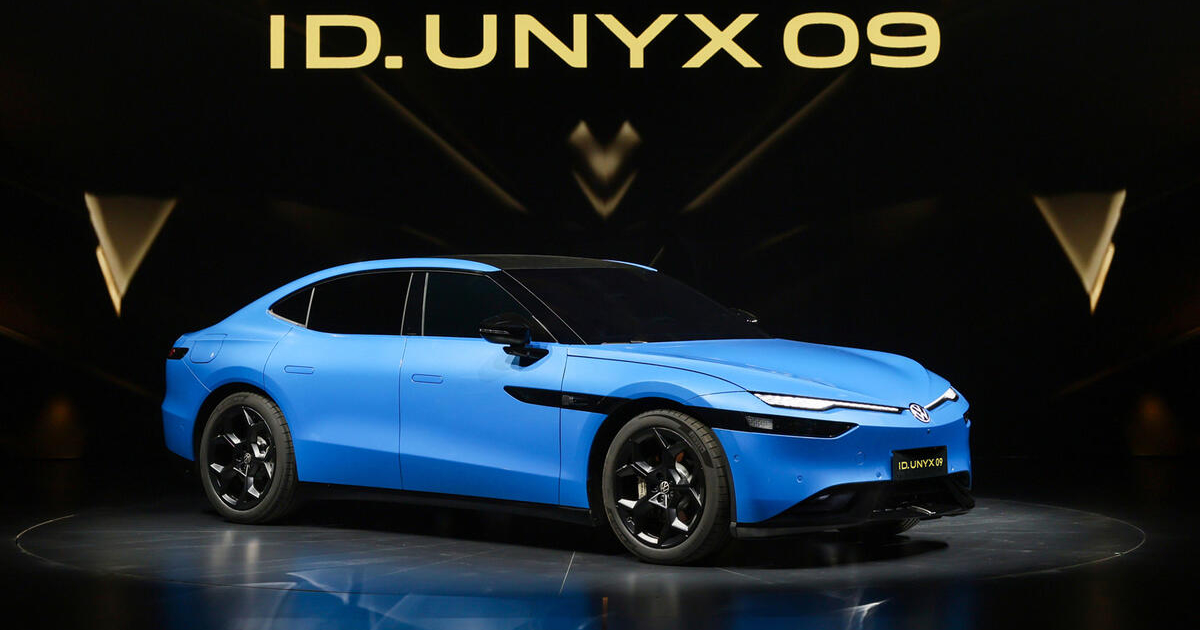
Volkswagen Group CEO Oliver Blume says the automaker is weighing whether EVs developed for China could eventually be sold in Europe — or built there through shared factory capacity with Chinese joint-venture partners. The idea is speculative for now, but it signals how seriously VW is taking the cost gap between its European lineup and what Chinese rivals charge. None of these models are headed to the US, where Section 301 tariffs block Chinese-assembled vehicles at the border.
What's actually on the table
The first tangible product from VW's China pivot is the ID. Unyx 08, a five-seat SUV that entered production in March 2026 at VW's Anhui plant — a joint venture with JAC that leans heavily on Xpeng's software and electrical architecture. The ID. Unyx 08 spans 196.9 inches in length and starts at roughly $31,400 pre-tax in China. Its 800-volt electrical system (charges faster than the more common 400-volt) supports up to 315 kW of DC fast charging — enough to add about 93 miles in five minutes. Battery options are 82 kWh and 95 kWh; claimed range is 630–730 km under China's CLTC test standard (EU range-test equivalent not yet published).
VW is also co-developing the Compact Main Platform (CMP) with Xpeng, targeting a 2027 launch in China with a projected 40% cost reduction versus current models. Blume described China's development ecosystem as a potential "blueprint architecture" for global products — but told Autocar European localization was "too early" to commit to, with VW's own platforms taking priority.
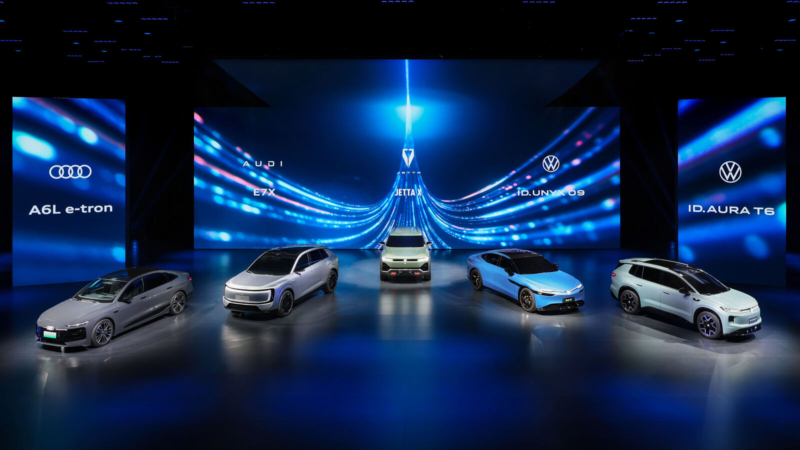 Volkswagen's China lineup on display at the 2026 Beijing Auto Show. Photo: VW
The tariff wall that complicates everything
Even if VW wanted to ship the ID. Unyx 08 from Anhui to Frankfurt, the EU's countervailing duty (CVD) tariffs — 17–38% on top of the standard 10% import rate — would erase most of the price advantage. A $31,400 China-market price could climb to roughly $40,000–$43,000 by the time it clears European customs. VW did negotiate a minimum-price deal to suspend a 20.7% tariff on the Cupra Tavascan, but replicating that for a higher-volume model like the ID. Unyx 08 is a different negotiation entirely, — per Reuters.
The capacity-sharing angle — letting SAIC, FAW, or Xpeng produce in underused VW European plants — sidesteps the import tariff problem but introduces its own complexity around labor agreements, union rules, and EU origin requirements.
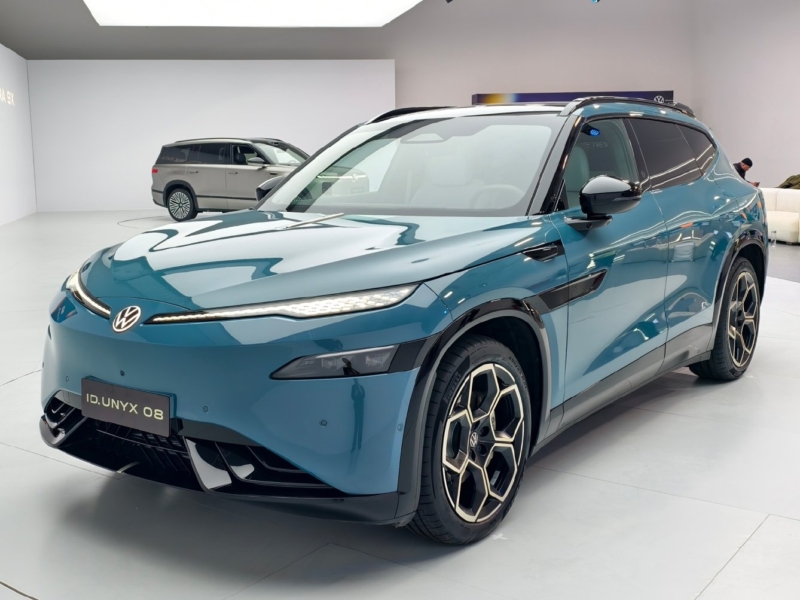 The ID. Unyx 08 is the first VW model co-developed with Xpeng. Photo: VW
Beijing 2026 previews a broader China strategy
At the 2026 Beijing Auto Show, VW unveiled a full ecosystem of China-specific products across three joint ventures. Volkswagen Anhui is building the ID. Unyx line with Xpeng tech. SAIC-Volkswagen is developing the ID. Era series using Momenta's driver-assistance software. FAW-Volkswagen covers the ID. Aura lineup and the budget Jetta sub-brand. The extended-range electric vehicle (EREV) ID. Era 9X — where a 1.5-liter gasoline engine acts solely as a generator — claims a total range of over 1,000 miles on a full tank and charge.
For US shoppers, this story is mostly a window into how aggressively VW is restructuring its cost base abroad. The ID.4 starts around $38,995 in the US, and the pressure to get that number lower is real — even if the China-built shortcut isn't available on this side of the Pacific.

