

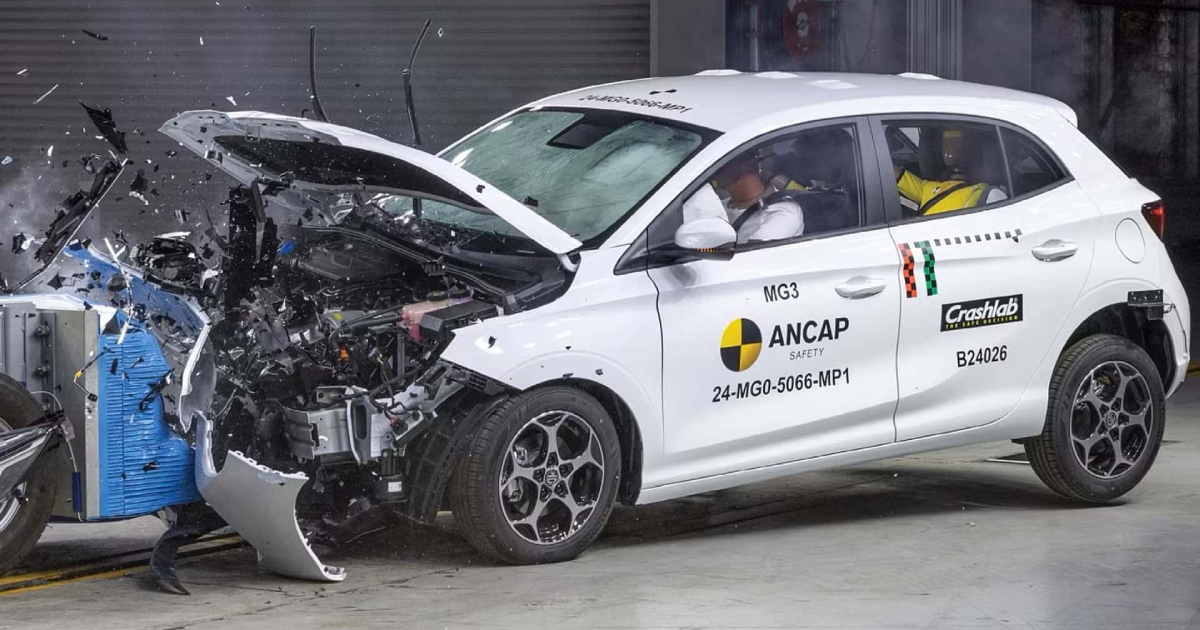
A seat that can break loose during a crash is about as serious as automotive safety defects get. During Euro NCAP's (Europe's independent vehicle safety rating program) 2025 crash-test series, the MG3's driver seat rail failed under frontal-impact loads, letting the seat slide roughly 4.4 inches forward — a defect the organization says is unprecedented in its 28-year history of testing.
What the failure actually means
When a seat shifts during a collision, the geometry of the entire occupant-restraint system is thrown off. Seatbelt pre-tensioners and load limiters are calibrated for a specific seating position. Airbags deploy toward a specific location. Move the seat, and both systems can misalign at exactly the moment they're needed most — sharply raising the risk of serious injury.
Euro NCAP confirmed the flaw is a real engineering defect, not a test anomaly, and MG Motor agreed.


The MG3's driver seat rail failed under frontal-impact loads during Euro NCAP's 2025 crash-test series, sliding roughly 4.4 inches forward — a finding MG Motor subsequently confirmed as a genuine engineering defect.
The fix and where things stand
MG redesigned the seat-latch hardware and put the updated part into production in August 2025. MG3 units built from that point on are not affected. The issue applies exclusively to cars assembled before that cutoff, and MG has been running a recall campaign through European regulatory channels and its dealer network to get those earlier vehicles repaired.
As of late April 2026, roughly 12,000 affected vehicles have been retrofitted — approximately two-thirds of the fleet that needs attention. Repair is free at any authorized MG dealership. Euro NCAP is urging owners who haven't heard from their dealer yet to check their vehicle's status proactively rather than wait for a notification that may not have arrived.
Why this matters beyond Europe
MG sold 85,155 vehicles in the UK alone in 2025, making it the country's 10th best-selling brand for the second consecutive year — per MG 2025 Sales Review. The brand's rapid growth across Europe has been built on competitive pricing and well-equipped models. Having a structural safety defect surface through an independent test rather than internal validation is a reputational problem no fast-growing brand wants.
MG does not currently sell vehicles in the United States, so there is no NHTSA campaign number and no domestic recall action. But the episode is a useful reminder: independent crash-test programs catch things that internal quality processes sometimes miss. Euro NCAP noted the company's post-discovery response was prompt — MG acknowledged the defect quickly and had a technical solution ready. That counts for something, even if the defect shouldn't have made it to production in the first place.

