

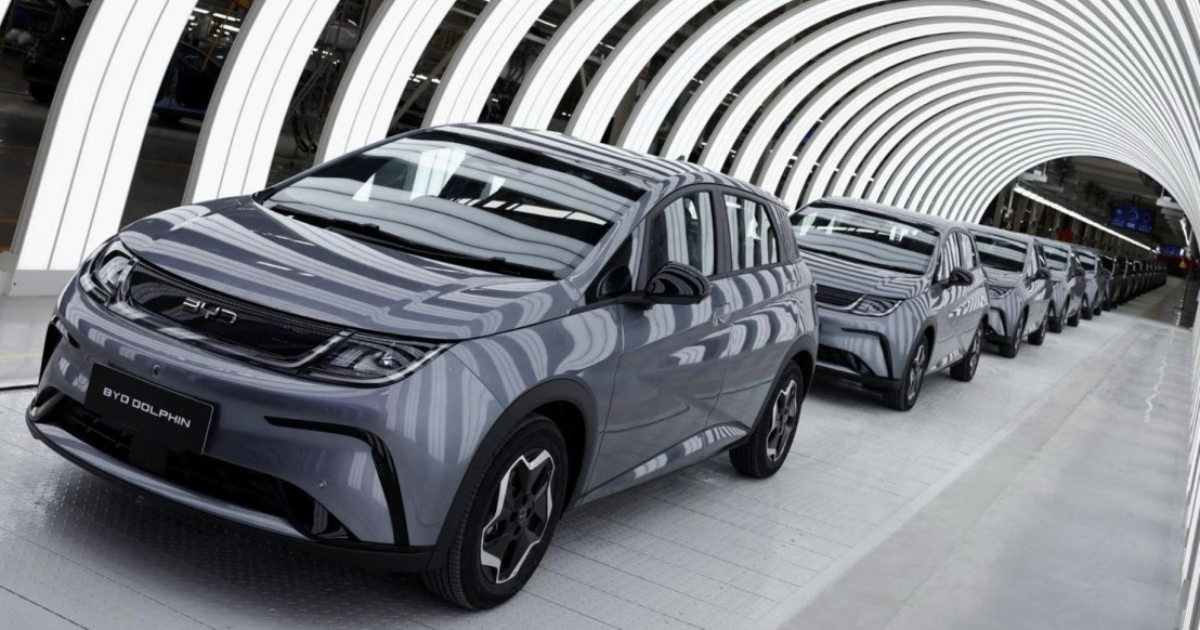
BYD is claiming its God's Eye driver-assistance suite has cut serious crash rates by roughly 80% across a fleet of 3 million vehicles spanning more than 60 models. The company presented that figure at the 13th Shanghai Intelligent Connected Vehicle Technology Conference in February 2025. The number is striking — but it comes with significant caveats, and the technology is locked inside China.
What the data actually says
BYD measures safety using airbag deployment frequency per 10 million kilometers driven — an internal metric that is not equivalent to NHTSA crash-test standards or ISO safety benchmarks. No independent third party, such as NHTSA, Euro NCAP, or JATO, has verified the claim. BYD's own figures show vehicles running its software trigger airbags about one-sixth as often as those without driver assistance — which the company rounds up to an "80% reduction" in serious incidents.
The company also reports that its Level 2 driver-assistance (meaning the driver must remain attentive and in control at all times) navigation features activate on more than 50% of trips. Automated parking functions engage even more often, in about 86% of parking situations, and BYD says low-speed contact damage drops to roughly one-fiftieth of the rate seen with unassisted parking.
The technology behind the claim
God's Eye rolls out in three tiers under BYD's DiPilot brand. The top tier uses roof-mounted LiDAR (a laser-based depth sensor) alongside cameras and radar. The mid tier uses a lower-cost LiDAR setup. The entry tier is camera-only. All three run on BYD's Xuanji Architecture — a centralized computing platform that fuses sensor data for powertrain, safety, and infotainment in one system. Software updates push every three days, trained on roughly 190 million kilometers of daily real-world driving data processed through cloud simulation.
BYD also claims the system can stabilize a vehicle after a sudden tire blowout in about 200 milliseconds — tests it says were conducted at speeds above 125 mph on closed tracks.
Why it isn't coming here
Section 301 tariffs make BYD vehicles effectively non-viable for US import, and the IRA's domestic-content rules under Section 30D would disqualify any BYD EV from the $7,500 federal tax credit regardless. Beyond trade barriers, the regulatory path for deploying AI-driven, data-intensive ADAS systems under US data-security frameworks remains unresolved.
God's Eye is standard equipment on 21 BYD models in China — starting with the Seagull at roughly $9,554 — at no extra cost. None of that hardware or software transfers to any BYD vehicle sold outside China, — per Inside China Auto. BYD has confirmed no Western rollout timeline.
What to watch
The underlying technology is real and the fleet scale is substantial. But until the crash-reduction claim is validated by an independent body using standardized methodology, the 80% figure should be treated as marketing data, not a safety benchmark. For now, comparable Level 2 systems from GM Super Cruise, Ford BlueCruise, and Tesla's Level 2 FSD remain the relevant reference points for shoppers in this market.

