

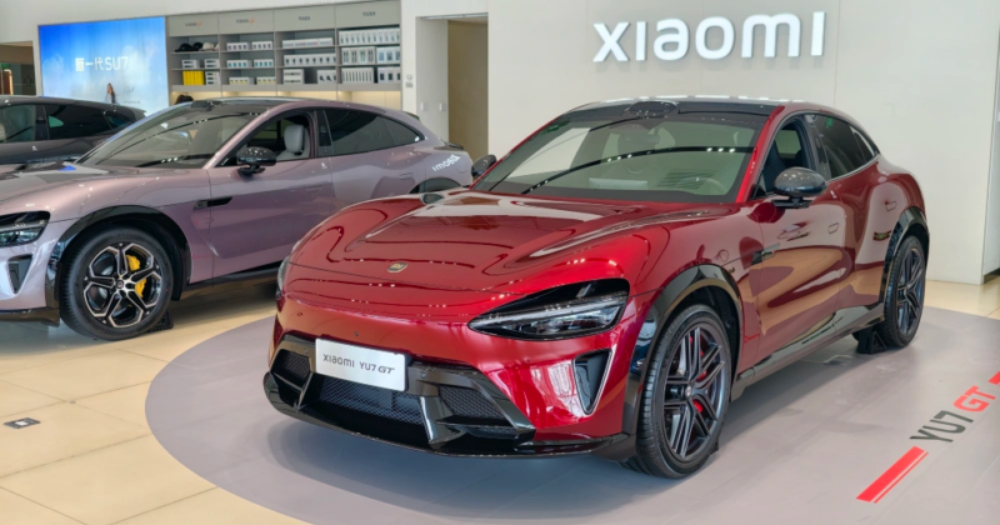
Xiaomi's electric vehicle business is growing fast — and losing money even faster. The company delivered 80,856 EVs in the first quarter of 2026, up 6.6% from the same period last year, yet its EV division posted an operating loss of 3.1 billion yuan ($457 million USD). That works out to roughly $5,600 lost on every single car sold.
Losses widened sharply year over year
For context, Xiaomi was losing about $900 per vehicle in Q1 2025. The jump to $5,600 per unit in just 12 months signals that scaling deliveries alone isn't closing the gap. Total EV revenue reached 19.0 billion yuan ($2.8 billion), with an average selling price around 235,000 yuan ($34,600 per vehicle). Gross margin slid to 20.1%, down from 23.2% a year earlier.
What's driving the losses
Xiaomi points to three main factors. First, China reduced its EV purchase tax exemption at the start of 2026 — switching from a full exemption to a 5% rate (capped at 15,000 yuan, roughly $2,200) through 2027. To cushion buyers from the change, Xiaomi and several other Chinese automakers stepped in with company-funded subsidies of up to that same 15,000 yuan cap, hitting their own margins directly.
Second, sales of the SU7 Ultra — a higher-margin performance variant — declined significantly from earlier peaks. Third, the cost of key components climbed during the quarter.
The model lineup is shifting
Xiaomi is transitioning away from the first-generation SU7 sedan toward newer products. The YU7 SUV, launched in June 2025, has accumulated 232,000 cumulative orders over 10 months. The refreshed SU7 secured more than 80,000 orders by May 6. A new YU7 GT variant, debuted May 21, starts at 389,900 yuan (about $57,300), while the base YU7 opens at 233,500 yuan ($34,300).
No US presence — and that's unlikely to change soon
None of these vehicles are sold in the United States, and Xiaomi has not announced any US market entry. A planned global expansion is reportedly targeted for 2027, but regulatory hurdles and the current Section 301 tariffs — which add a 100% duty on Chinese-made EVs imported into the US — make any near-term US launch financially impractical. The IRA's Section 30D EV tax credit also excludes vehicles assembled outside North America, adding another structural barrier.
Back in China, Xiaomi expanded its retail network to 490 stores across 143 cities as of March 31. April deliveries hit 36,702 units, up 28.4% year over year — per Electrive.

