

.jpg)
According to the China Passenger Car Association (CPCA), CATL's share in the domestic electric vehicle battery market reached 50.1% in the first quarter of 2026.
Dominance without questions
In the nickel-manganese-cobalt (NMC) battery segment, CATL's share soared to 81.6%. This gap was made possible because their main competitor, BYD, completely switched to using lithium iron phosphate (LFP) cells.
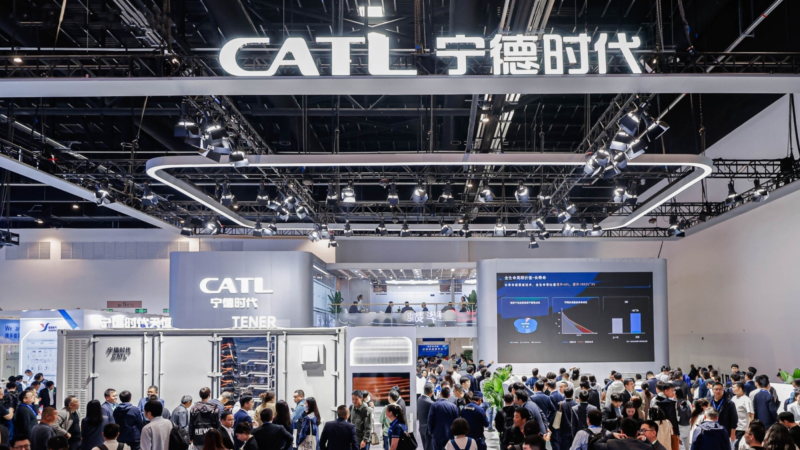 CATL company stand at the international energy exhibition. Photo: CATL
Interestingly, even in the LFP segment, which is traditionally considered "BYD territory", CATL manages to flex its muscles. They now control 41% of this market, which is the highest figure for the company in the last four years. Meanwhile, BYD showed its weakest result in five years - only 17.5% of the market, which is 4.3% less than last year.
Production versus actual demand
Despite optimistic reports on market shares, the overall picture looks somewhat alarming. In the first two months of 2026, China produced batteries with a total capacity of 310 GWh, which is 22% more than in the same period last year. However, the ratio of produced batteries to those actually installed in vehicles fell to a historical low of 19%. This means warehouses are overflowing, and production rates far exceed car sales.
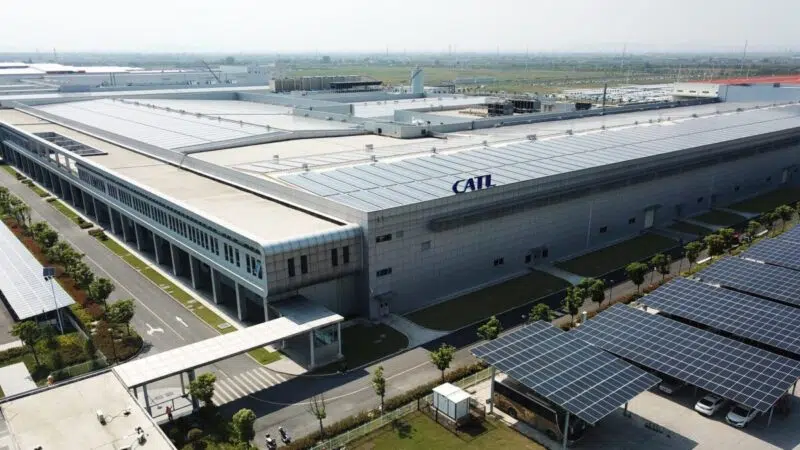 Production facilities of the CATL plant in Liyang city. Photo: CATL
This decline is explained by the gradual phasing out of government subsidies in China, leading to a temporary drop in demand for electric vehicles (BEVs) and plug-in hybrids (PHEVs). In February, battery installations on pure electric vehicles fell by 41% and on PHEVs by a significant 61%.
The technological bar is rising
The market is becoming more demanding in terms of the quality of "fuel" for electric cars. According to official CATL and CPCA reports, the share of batteries with low energy density (less than 125 Wh/kg) has officially fallen to 0%. The standard is now considered to be in the range of 125-160 Wh/kg. Moreover, 15% of all new batteries already have a density of over 160 Wh/kg.
The struggle for leadership will soon move to a new dimension. As early as July 2026, China plans to introduce a state standard for solid-state batteries. CATL is actively working on solving sulfide instability issues to launch pilot production in 2027. Meanwhile, BYD is preparing for mass production of sodium-ion batteries. CATL's financial foundation allows for such experiments: the company's net profit for 2025 was a record $10 billion.

