

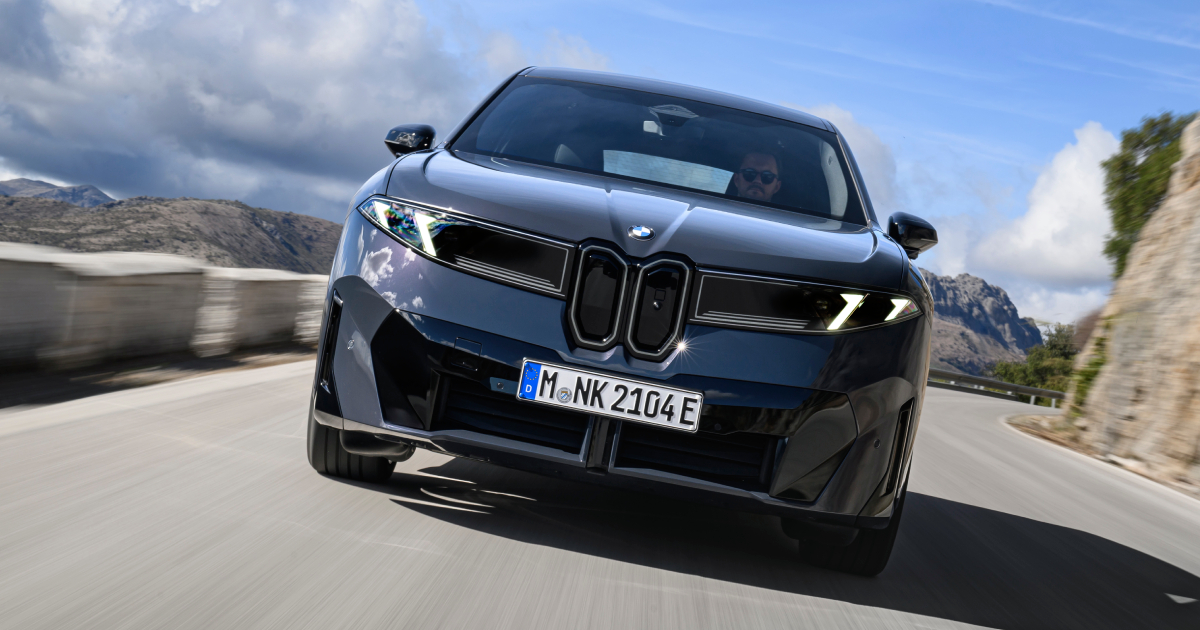
The BMW iX3 just made a strong case for long-distance electric travel. In a 1,000-kilometer (621-mile) highway test conducted by Norwegian EV benchmarker Björn Nyland, the iX3 50 xDrive completed the run in 8 hours and 55 minutes with only two charging stops — the first time any EV has achieved that in Nyland's standardized testing format. The test ran on Nordic motorways at roughly 32°F (0°C), conditions that typically hurt electric range, making the result more significant for anyone planning winter road trips.
Charging speed is the real story
The iX3's 800-volt electrical system — which charges faster than the more common 400-volt architecture — is what enables those short stops. At a 400 kW DC fast-charger, the iX3 peaked at exactly 400 kW near the bottom of its charge, and held 284 kW even at 53% state of charge. A session from 6% to 80% took just 21 minutes. One note: hitting 400 kW requires a charger capable of 600 amps; at the more common 500-amp limit, peak power drops to around 380 kW. Still, at Tesla Supercharger stations — using a CCS1 adapter — the iX3 pulled 170 kW, beating the Audi Q6 e-tron (135 kW) and Hyundai's E-GMP platform vehicles (around 100 kW).
Average energy consumption across the full 621 miles came to 25.4 kWh/100 km (2.33 miles per kWh), impressive for a large all-wheel-drive SUV in freezing temperatures.
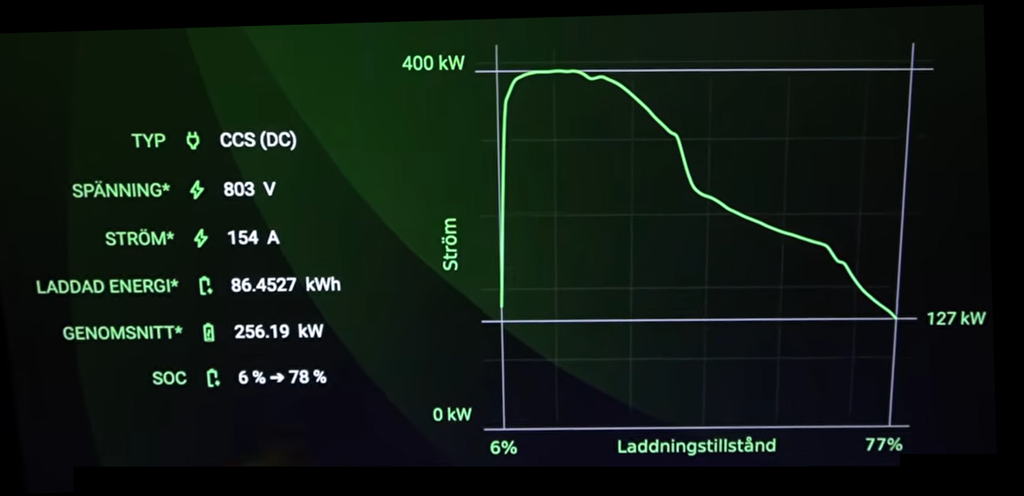 iX3 50 xDrive charging curve from Björn Nyland's 1,000 km test. Photo: Björn Nyland
What this means for US buyers
BMW USA is targeting a summer 2026 launch for the iX3 50 xDrive at around $60,000 — no final EPA range figure is certified yet, but BMW's preliminary estimate sits near 400 miles EPA. For context, Nyland's tested rivals, the Tesla Model S Long Range and Zeekr 7X, ran their tests in warmer conditions and still clocked comparable overall times. Every electric SUV in the segment finished slower.
IRA Section 30D tax credit eligibility ($7,500) remains unconfirmed: the iX3 is assembled in Debrecen, Hungary, and its battery and critical-mineral sourcing hasn't cleared the Treasury's requirements. Buyers should plan for no federal credit at launch.
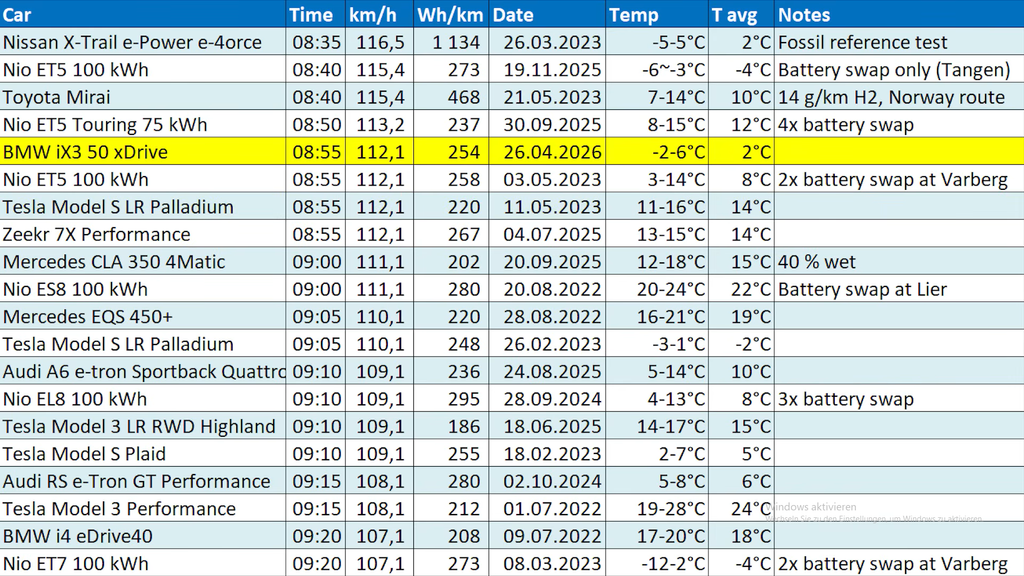 Full results summary from Nyland's 1,000 km highway test. Photo: Björn Nyland
One real-world caveat: the iX3's range-estimation software tends toward optimism. Nyland noted the system was slow to adjust to sustained headwinds, causing the projected charge-at-destination figure to drop steadily mid-drive — a behavior Tesla's software handles more quickly. BMW pushes over-the-air updates, so that's a fixable problem, but worth knowing before a long interstate run.
The iX3 50 xDrive enters a segment that hasn't yet seen an electric SUV prove itself convincingly on a cold-weather distance run. This test suggests BMW's Neue Klasse platform is ready for that conversation.

