

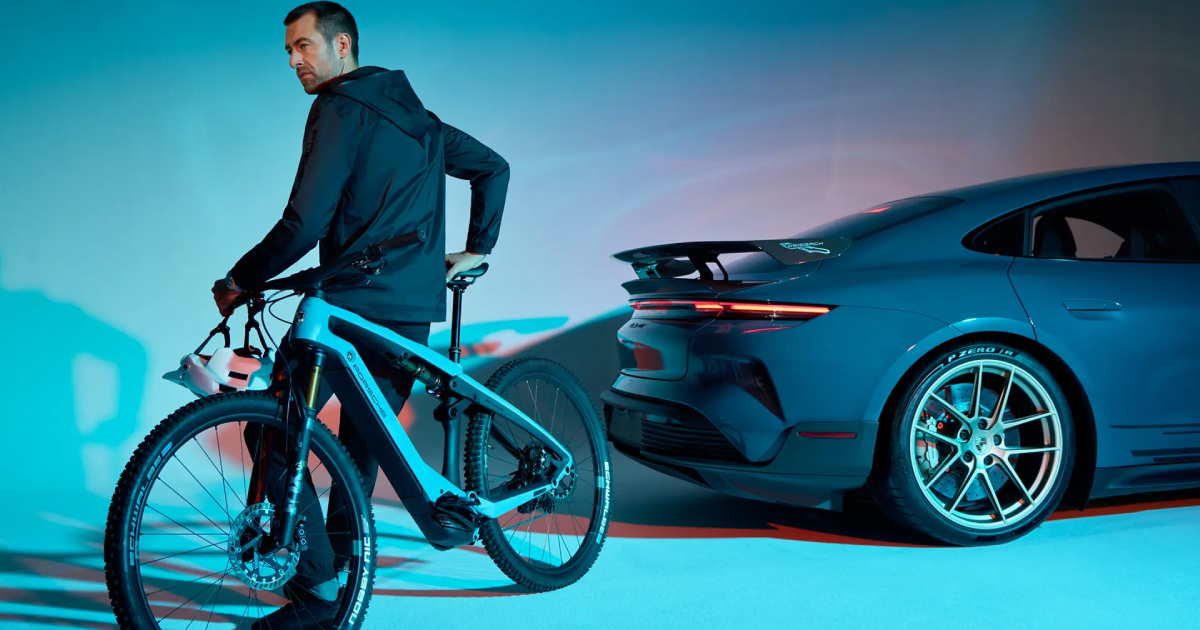
Porsche is closing three subsidiaries and cutting more than 500 jobs as part of a broad restructuring, and the timing couldn't be trickier: gas-powered Macan production ends this summer, and a replacement with a combustion or plug-in hybrid powertrain won't arrive until 2028. That leaves buyers who want a conventional Macan waiting — or shopping elsewhere.
The profit numbers tell the story. Porsche's operating profit collapsed to €413 million in 2025, down from €5.64 billion the year before — a 90% drop — per Porsche Newsroom. CEO Michael Leiters called the subsidiary closures painful but necessary to refocus the company on its automotive core.
What's being cut
Cellforce Group, Porsche's in-house developer of high-performance lithium-ion battery cells, is being shut down with 50 jobs lost. Porsche says the unit no longer fits its technology-open powertrain strategy — a significant reversal for a brand that once positioned itself as an EV leader.
Porsche eBike Performance, which built electric drive systems for e-bikes, is also closing. About 360 employees in Germany and Croatia will be affected, with Porsche citing "fundamentally changed market conditions" in the micro-mobility segment.
A third unit, Cetitec — an engineering and software consultancy for automotive projects based in Pforzheim — is being wound down, eliminating 60 jobs in Germany and 30 in Croatia.
On top of that, Porsche is folding its Car-IT software division into its main R&D; department under Michael Steiner, effectively undoing the dedicated software executive role the company created in 2021 when it recruited Sajjad Khan from Mercedes-Benz to lead digital development.
The Macan problem
The restructuring lands at an awkward moment for the Macan lineup. Gas-powered Macan production wraps up this summer, and the electric Macan is the only version on sale until a new internal-combustion engine (ICE) and hybrid Macan arrives in 2028, per Kelley Blue Book.
The sales data underscores the risk. In Q1 2026, Macan buyers in the US chose the combustion version over the electric model at roughly a 56-to-44 split — 10,130 ICE units versus 8,079 electric, according to figures cited by Carscoops. Demand for a gas Macan isn't fading; the product simply won't be available.
The $7,500 federal EV tax credit (IRS Section 30D) phases out for vehicles above the MSRP cap, and the electric Macan's pricing puts it out of reach for that credit — removing a key financial incentive that might otherwise offset the preference gap. Buyers weighing a $70,000-plus electric crossover against comparably equipped gas competitors are making a straightforward value calculation, and Porsche currently has little to offer them until 2028.
What it means
Closing Cellforce signals a retreat from proprietary battery development, making Porsche more dependent on outside suppliers for its EV future — a notable shift for a brand whose entire identity rests on engineering distinctiveness. Combined with the Macan gap, the restructuring raises real questions about execution on Porsche's electrification roadmap.

