

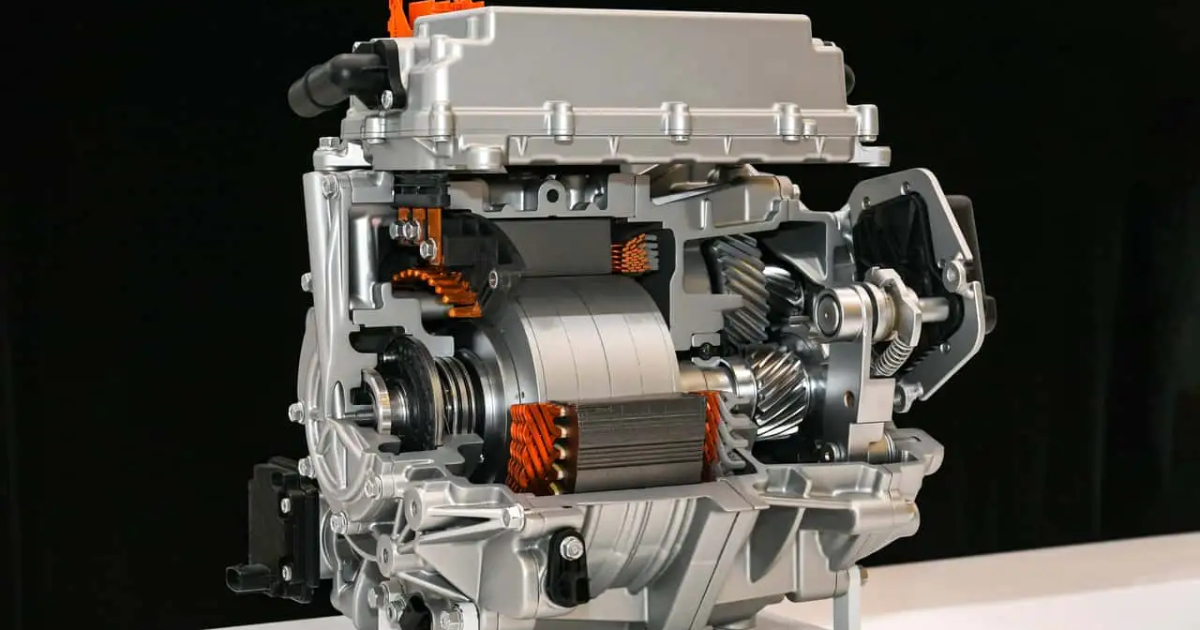
Hyundai Mobis, the parts-and-engineering arm of Hyundai Motor Group, has unveiled a 160 kW (215 hp) integrated electric powertrain unit aimed squarely at the broader auto industry — not just its own brands. The system packs a motor, inverter, and reduction gear into a single housing that's roughly 20% more compact than comparable units, with 16% higher specific power density. No specific vehicle model or US showroom date has been confirmed yet, but the platform is designed to underpin the group's 22-to-36-model EV expansion through 2030.
What's inside the unit
The 160 kW figure translates to 215 hp — enough for a capable mainstream electric sedan or crossover. More notable than the output is the engineering approach: Hyundai Mobis standardized the stator, inverter, and power module components so they can be shared across different powertrain tiers. Think of it as an interchangeable parts strategy for electric drivetrains. The company credits improved cooling architecture and more efficient power semiconductors for the size and density gains.
The system also supports dual-motor all-wheel-drive configurations — two units, one per axle — which would effectively double output for performance-oriented models.
A three-tier lineup, and outside buyers
The 160 kW unit sits in the middle of a three-tier family. A 250 kW (335 hp) high-performance version launched in 2025. A 120 kW (161 hp) compact-car variant is planned for the first half of 2026. Together, they're designed to cover everything from small hatchbacks to large SUVs using shared tooling and parts — a meaningful cost lever as automakers try to trim EV production expenses.
Hyundai Mobis is also pitching the platform beyond its parent group. Mercedes-Benz and Stellantis are already confirmed Mobis customers for battery systems, and the supplier is openly targeting third-party OEM contracts for its powertrain lineup as well. A battery plant in Spain is underway in partnership with Volkswagen Group.
What this means for US buyers
There's no direct impact on dealership inventory today. Hyundai and Genesis EVs sold here — including models using the NACS connector (Tesla-developed, now the US industry standard) — will eventually incorporate this platform, but no model-specific announcement has been tied to this launch. The longer-term payoff: if non-Korean automakers competing in North America license the modular system, the cost savings from shared components could filter down to sticker prices on future EVs.

